

Summer skincare is often associated with lightweight lotions, cooling gels, and sun protection. However, exposure to sunlight, air conditioning, swimming pools, frequent showers, and dry indoor environments can still remove moisture from the skin. This is why richer moisturising products can remain useful even during warmer months.
Why Body Butters Belong in Your Summer Routine becomes clear when you consider how summer conditions affect different areas of the body. While the face may require lightweight products, areas such as the elbows, knees, heels, hands, and legs can become rough or dry. A carefully applied body butter can help restore moisture without making the entire body feel heavy or greasy.
Body butter is generally thicker than body lotion and is commonly formulated with plant-based oils, natural butters, and other moisturising ingredients. When used correctly, it can support soft, comfortable, and well-conditioned skin throughout the season.
What Is Body Butter?
Body butter is a rich moisturising product designed to soften the skin and reduce moisture loss. It usually has a thicker texture than standard body lotion because it contains a higher concentration of oils and butters.
Common ingredients may include shea butter, cocoa butter, mango butter, coconut oil, jojoba oil, almond oil, or avocado oil. These ingredients help create a protective layer on the skin’s surface, which slows down water loss.
Unlike water-based lotions that absorb quickly, body butter may take slightly longer to settle into the skin. For this reason, the amount used and the time of application are important, especially during hot or humid weather.
How Body Butter Differs from Body Lotion
Body lotions usually contain more water and have a lightweight consistency. They are suitable for everyday hydration, particularly when the weather is humid or the skin is not very dry.
Body butter has a denser texture and provides longer-lasting moisturisation. It is generally better suited to dry areas, post-shower care, overnight use, or skin that feels rough after sun and water exposure.
Both products can be included in a summer routine. Lotion may be used during the day, while body butter can be applied to selected areas in the evening.
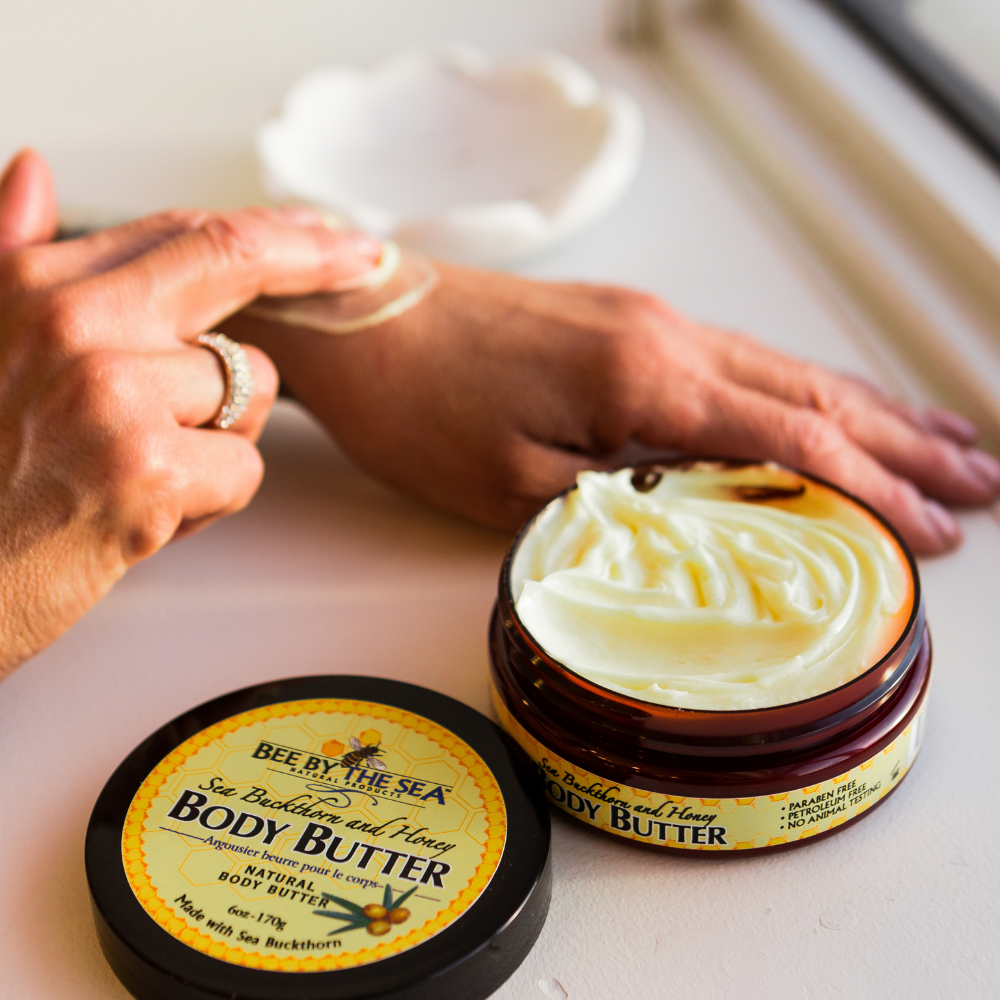
Why Skin Can Become Dry During Summer
Hot weather does not always mean hydrated skin. Several common summer habits can weaken the skin’s moisture balance.
Long periods in air-conditioned rooms may reduce moisture in the surrounding air. Swimming in chlorinated pools or salt water may leave the skin feeling tight. Frequent showers can also remove natural oils, particularly when hot water or strong cleansers are used.
Sun exposure is another important factor. Although sunscreen protects the skin from ultraviolet radiation, extended time outdoors may still leave the skin feeling dry or uncomfortable. Applying a moisturising product after bathing can help support the skin barrier.
Body butter can be especially useful after travel, swimming, outdoor activities, or repeated exposure to air conditioning.
Benefits of Using Body Butter in Summer
Supports the Skin’s Moisture Barrier
The outermost layer of the skin helps retain water and protect the body from environmental irritants. When this barrier becomes dry, the skin may feel rough, itchy, or tight.
Body butter helps reduce moisture loss by forming a soft protective layer over the skin. This can be particularly helpful after showering, when the skin is clean and slightly damp.
Softens Dry Areas
Certain parts of the body naturally have fewer oil glands and may remain dry throughout the year. Elbows, knees, heels, ankles, and knuckles often need more focused moisturising.
Applying a small amount of body butter to these areas can improve softness and reduce the appearance of rough skin. Regular use may also help keep heels and elbows comfortable when wearing open footwear or sleeveless clothing.
Provides Longer-Lasting Moisturisation
Lightweight lotions may need to be reapplied frequently, especially after swimming or showering. Body butter usually stays on the skin for longer because of its richer consistency.
This makes it suitable for evening skincare, when the product has more time to absorb without being affected by heat, sweat, or clothing changes.
Helps Condition Skin After Sun Exposure
Body butter should not replace sunscreen or after-sun medical care. However, it can help moisturise skin that feels dry after spending time outdoors.
Choose a gentle formula without strong fragrance if the skin feels sensitive. Avoid applying body butter to sunburned, blistered, or irritated skin until the area has cooled and recovered.
How to Use Body Butter During Summer
The best time to apply body butter is after bathing. Gently pat the skin with a towel, leaving it slightly damp. Take a small amount of product and massage it into dry areas using circular movements.
Avoid applying a thick layer across the entire body during humid weather. Start with a small quantity and add more only where needed. This helps prevent a sticky or heavy feeling.
For daytime use, apply body butter several minutes before dressing. For a lighter routine, reserve it for nighttime and use body lotion during the day.
Focus on Targeted Application
Body butter does not need to be applied everywhere. Use it on:
- Elbows and knees
- Heels and ankles
- Hands and cuticles
- Dry patches on the arms or legs
- Areas affected by frequent shaving
Targeted use gives the skin the benefits of a rich moisturiser without creating unnecessary heaviness.
Choosing the Right Body Butter
Look for a formula suited to your skin type and local climate. People with very dry skin may prefer products containing shea butter, cocoa butter, or ceramides. Those living in humid conditions may benefit from a softer, fast-absorbing formula.
Fragrance-free options may be better for sensitive skin. It is also advisable to review the ingredient list if you have known allergies to nuts, plant oils, or essential oils.
Perform a patch test before using a new product over a large area. Apply a small amount to the inner arm and observe the skin for at least 24 hours.
Common Mistakes to Avoid
Using too much product is one of the most common mistakes. A thick layer does not necessarily provide better moisturisation and may feel uncomfortable in warm weather.
Do not apply body butter immediately before intense exercise, as sweat and friction may cause discomfort. It should also not be used as a substitute for sunscreen. During the day, apply broad-spectrum sunscreen to exposed areas after the moisturiser has absorbed.
Store the product in a cool, dry place. High temperatures may soften or melt natural butters, although this does not always affect product performance.
Conclusion
Body butter can remain a practical part of summer skincare when used in moderation. It helps reduce dryness, soften rough areas, and support the skin’s natural moisture barrier after sun exposure, swimming, air conditioning, and frequent bathing.
The key is to use a small amount, focus on areas that need extra care, and apply it when the skin is slightly damp. With the right formula and application method, body butter can provide lasting moisture without making summer skincare feel heavy.