
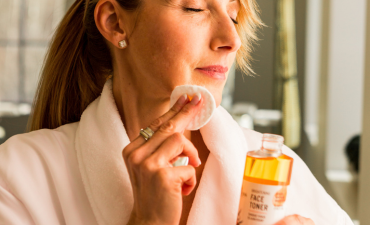
Face toner is a skincare product commonly used after cleansing and before applying serums or moisturisers. Modern toners can serve several purposes, depending on their formulation. Some focus on hydration, while others are designed to remove residual impurities, support oily skin, gently exfoliate, or prepare the skin for the next steps in a skincare routine.
Understanding How to Use Face Toner Benefits, Uses & When to Apply can help you introduce the product correctly without adding unnecessary steps to your routine. The right toner should complement your cleanser, moisturiser, and other skincare products rather than replace them.
What Is Face Toner?
Face toner is a lightweight liquid skincare product that is generally applied after cleansing. Toners were traditionally associated with removing excess oil and tightening the feeling of the skin. However, current formulations vary considerably.
Depending on the ingredients, a toner may contain humectants, botanical extracts, exfoliating acids, soothing ingredients, or oil-control components.
Hydrating toners are often formulated to provide moisture, while exfoliating toners may contain ingredients such as alpha hydroxy acids or beta hydroxy acids. Other products may be designed specifically for sensitive, oily, dry, or combination skin.
The purpose of a toner therefore depends largely on its ingredient profile.
What Are the Benefits of Using Face Toner?
Face toner can provide different benefits depending on the type of product and the needs of your skin.
Helps Remove Residual Impurities
Even after cleansing, small amounts of makeup, sunscreen, oil, or environmental residue may remain on the skin. Applying toner can help remove some of this remaining residue.
However, toner should not be treated as a replacement for proper cleansing. A suitable facial cleanser should still be the main product used to clean the skin.
Adds Hydration to the Skin
Many modern toners contain ingredients designed to attract or retain moisture.
Hydrating toners may include glycerin, hyaluronic acid, aloe vera, or other moisture-supporting ingredients. These formulations can be particularly useful for people whose skin feels dry or tight after cleansing.
Applying a hydrating toner before a serum or moisturiser can also add another lightweight layer of moisture.
Helps Prepare Skin for Other Products
Toner is commonly positioned between cleansing and treatment products.
A lightweight toner can leave the skin slightly hydrated, allowing serums and moisturisers to be applied smoothly afterward. This does not mean toner is essential for every routine, but it can help create a consistent transition between cleansing and moisturising.
May Support Oily or Congested Skin
Certain toners are formulated with ingredients intended for oily or acne-prone skin.
Products containing salicylic acid, for example, may help exfoliate inside pores and remove excess oil. Other formulas may contain ingredients designed to reduce the appearance of surface oil.
People with sensitive skin should introduce active toners gradually, as overuse can cause dryness or irritation.
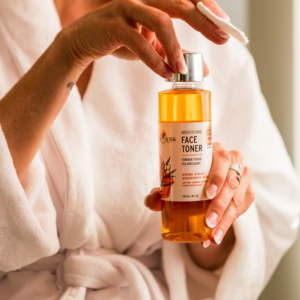
How to Use Face Toner Correctly
Using toner is relatively simple, but the application method can vary depending on the formulation.
Begin by cleansing your face with a cleanser appropriate for your skin type. Gently pat the skin dry, leaving it slightly damp if recommended by the toner manufacturer.
Pour a small amount of toner onto clean hands or a cotton pad.
If using your hands, gently press or pat the product across your face and neck. If using a cotton pad, lightly sweep it over the skin without applying excessive pressure.
Allow the toner to absorb briefly before continuing with serum, moisturiser, or other skincare products.
Avoid applying toner directly around the eyes unless the product specifically states that it is suitable for that area.
When Should You Apply Face Toner?
Toner is generally applied immediately after cleansing.
A basic skincare routine may follow this order:
- Cleanser
- Toner
- Serum or treatment
- Moisturiser
- Sunscreen during the daytime
Some people use toner both morning and evening, while others use it only once per day.
The appropriate frequency depends on the formulation. A gentle hydrating toner may be suitable for regular use, whereas an exfoliating toner containing acids may need to be used less frequently.
Always follow the directions provided for the specific product.
Should You Use Toner in the Morning or at Night?
Face toner can be used during either a morning or evening skincare routine.
In the morning, a hydrating toner can help prepare the skin before serum, moisturiser, and sunscreen.
At night, toner can be applied after cleansing to remove remaining residue and prepare the skin for treatment products.
People using stronger exfoliating toners may prefer evening application, particularly when the formulation contains ingredients that can increase sensitivity to sunlight.
Daily sunscreen remains important when using exfoliating acids.
How to Choose a Face Toner for Your Skin Type
Choosing a toner should begin with understanding your skin type and the purpose of the product.
Toner for Dry Skin
Look for hydrating ingredients such as glycerin, hyaluronic acid, panthenol, or aloe vera. Avoid products that leave the skin feeling excessively tight or dry.
Toner for Oily Skin
Lightweight toners containing oil-balancing or gentle exfoliating ingredients may be suitable. Salicylic acid is commonly used in products designed for oily or congested skin.
Toner for Sensitive Skin
Choose simple formulations containing soothing or hydrating ingredients. Fragrance, high alcohol concentrations, and strong exfoliating ingredients may be unsuitable for some sensitive skin types.
Toner for Combination Skin
Combination skin may benefit from a balanced hydrating toner or targeted use of different products depending on oily and dry areas.
Common Mistakes to Avoid When Using Toner
Using too much toner does not necessarily improve its effectiveness. A small amount is usually sufficient to cover the face.
Another common mistake is combining several exfoliating products in the same routine. For example, using an exfoliating cleanser, acid toner, and strong treatment serum together may increase the likelihood of irritation.
You should also avoid assuming that every toner must create a tight or dry feeling. Modern toners are often designed to support hydration rather than remove all natural oils from the skin.
Introduce new products gradually and stop using a toner if persistent irritation develops.
Conclusion
Knowing How to Use Face Toner: Benefits, Uses & When to Apply can help you decide whether toner has a useful place in your skincare routine. Toner is generally applied after cleansing and before serums or moisturisers, but its exact purpose depends on the formulation.
Hydrating toners can add moisture, exfoliating toners may help manage congestion, and gentle formulations can prepare the skin for subsequent products. Selecting a toner based on your skin type, checking its ingredients, and using it at an appropriate frequency can help keep your skincare routine simple, balanced, and suitable for your individual needs.