

Face oils can be a useful addition to a skincare routine when applied correctly. They are generally used to support the skin’s moisture barrier, reduce the feeling of dryness, and leave the skin feeling softer and smoother. However, the order of application, amount used, and choice of oil can affect how well it fits into your routine.
Understanding how to use nourishing face oil in your skincare routine can help you incorporate it without making your skin feel unnecessarily heavy or greasy. Whether your skin is dry, combination, or sensitive, a thoughtful approach can help you determine how often and when to use a face oil.
What Is a Nourishing Face Oil?
A nourishing face oil is a skincare product made with one or more plant-derived or cosmetic oils. Depending on the formulation, it may contain ingredients such as jojoba oil, squalane, rosehip oil, argan oil, or other emollient ingredients.
Face oils primarily work by helping soften the skin and reducing moisture loss from its surface. Unlike water-based moisturisers, oils generally do not add significant water to the skin. Instead, they can help support moisture retention when applied as part of a balanced skincare routine.
The exact benefits depend on the formulation, so it is important to review the ingredient list rather than assuming all facial oils work in the same way.
When Should You Apply Face Oil?
Face oil is usually applied toward the end of a skincare routine. A general approach is to apply products from lighter, water-based textures to heavier products.
For example, you may start with cleanser, followed by toner or essence if you use one, then serum and moisturiser. Face oil can usually be applied after these steps.
Morning or Evening Application
Face oil can be used in either a morning or evening routine, depending on your skin and the product.
Many people prefer using it at night because there is more time for the product to settle on the skin. If you use face oil in the morning, allow it to absorb before applying sunscreen.
Sunscreen should remain the final skincare step before makeup during the day. Avoid mixing facial oil directly into sunscreen, as doing so may interfere with even sunscreen application.
How to Apply Nourishing Face Oil Correctly
You generally need only a small amount of face oil. Using more does not necessarily provide additional benefits and may leave the skin feeling greasy.
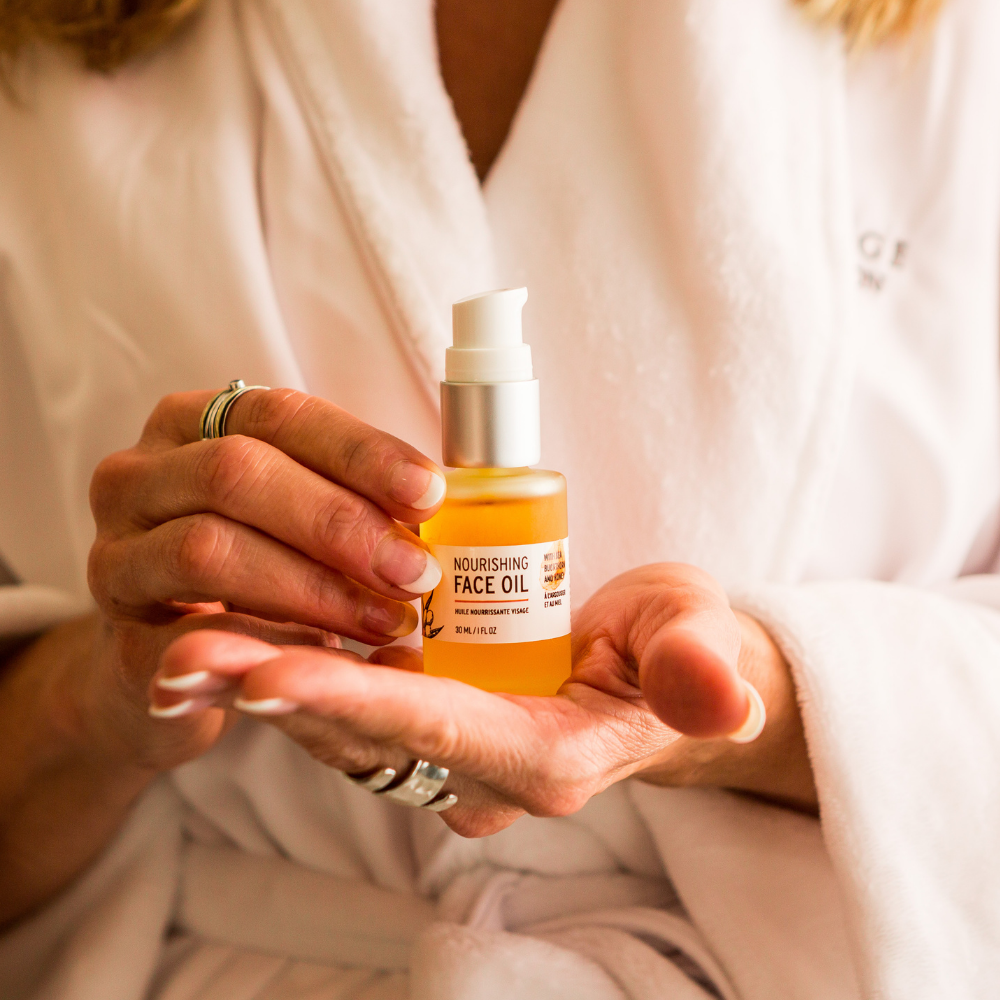
Start with two or three drops. Place the oil onto clean fingertips, gently rub your hands together, and press the product across your face.
Press Instead of Rubbing Aggressively
Use gentle pressing or smoothing movements rather than rubbing the skin forcefully. Spread the oil evenly across the cheeks, forehead, and other areas that tend to feel dry.
You can also extend the product to the neck if desired. Avoid applying too close to the eyes unless the product instructions specifically state that it is suitable for that area.
Give the oil a few minutes to settle before applying other products or going to bed.
Use Face Oil With a Moisturiser
Face oil and moisturiser perform different roles, so one does not always need to replace the other.
A moisturiser typically contains a combination of water, humectants, emollients, and sometimes occlusive ingredients. Face oils mainly provide emollient and occlusive properties.
For dry skin, applying moisturiser first and then a small amount of oil may help reduce moisture loss. You can concentrate the oil on areas that feel particularly dry instead of applying the same amount everywhere.
Can You Mix Face Oil With Moisturiser?
Some facial oils can be mixed with moisturiser, depending on their formulation and product instructions. You can add a drop of oil to your moisturiser in your palm before applying it.
However, layering the products separately can make it easier to control how much oil is applied and where it is needed.
Choose Face Oil According to Your Skin Type
Different skin types may respond differently to facial oils.
Dry skin may tolerate richer formulations, particularly during colder or drier weather. Combination skin may benefit from applying oil primarily to dry areas rather than the entire face.
People with oily or acne-prone skin should select products carefully. Look for lightweight formulations designed for facial use and introduce them gradually.
Sensitive skin may benefit from simpler formulas with fewer fragrance ingredients. A patch test can also help identify potential irritation before applying a new product across the entire face.
How Often Should You Use Face Oil?
There is no single schedule that works for everyone. Start by using face oil a few evenings per week and observe how your skin responds.
If your skin continues to feel comfortable and the product does not cause irritation or congestion, you may gradually adjust the frequency.
Environmental conditions can also affect how often you need it. For example, skin may feel drier during winter, after spending time in air-conditioned environments, or in areas with low humidity.
Common Face Oil Mistakes to Avoid
Applying too much product is a common mistake. A few drops are usually enough to cover the face.
Another issue is applying oil before water-based products. Because oils can create a barrier on the skin, applying serums or lightweight moisturisers afterward may reduce how evenly those products spread.
Do not assume that natural ingredients cannot cause irritation. Botanical oils and essential oils may still trigger sensitivity in some people. Always check the product instructions and stop using a product if persistent redness, itching, or discomfort occurs.
Final Thoughts
Learning how to use nourishing face oil in your skincare routine involves understanding where the product fits, how much to apply, and how your skin responds over time.
In most routines, face oil works well after moisturiser and before sunscreen in the morning, while at night it can serve as one of the final skincare steps. Start with a few drops, apply gently, and adjust the frequency according to your skin’s needs.
Choosing a formulation appropriate for your skin type and introducing it gradually can help you incorporate face oil into your routine without adding unnecessary complexity.